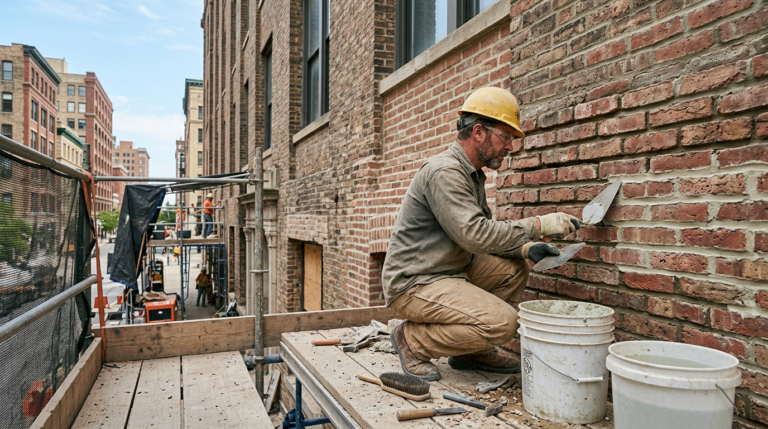
The Enduring Importance of Chicago’s Historic Facades
Chicago is a city defined by its architecture. From the iconic bungalows of Beverly to the Romanesque landmarks of Bronzeville, our buildings are more than just shelter—they are the physical record of our history. However, as we move through 2026, many of these structures are facing critical maintenance windows. Understanding the difference between a simple patch job and true historic restoration is vital for any property owner.
Key Questions Answered
- What is historic masonry restoration? It is the process of repairing and preserving building materials in a way that is chemically and physically compatible with the original structure, often following the Secretary of the Interior’s Standards.
- Why is lime mortar used in older buildings? Lime mortar is breathable and softer than modern Portland cement, allowing moisture to escape and preventing the original bricks from cracking or spalling.
- When should I assess my masonry? A thorough evaluation is recommended every 5–10 years to identify early signs of mortar degradation, moisture infiltration, or structural shifting.
Key Takeaways
- Historic Chicago buildings require specialized materials, particularly traditional lime mortars, to ensure long-term structural health.
- Preventative restoration, such as precision repointing and atmospheric cleaning, protects against the harsh Chicago freeze-thaw cycles.
- Choosing engineering-led restoration solutions prevents the common failures associated with “modern material” repairs on historic fabric.
The Rise of Preservation Awareness in Chicago
In recent years, there has been a significant shift in how Chicagoans view their historic building stock. Current trends in 2026 show a renewed focus on adaptive reuse—transforming old industrial warehouses and historic churches into vibrant community spaces. This movement underscores the need for expert masonry care. According to recent preservation reports, landmarked buildings in areas like Lincoln Park and Oak Park are seeing increased investment in specialized restoration techniques.
Precision Restoration in Practice
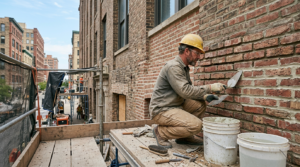
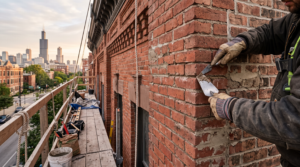
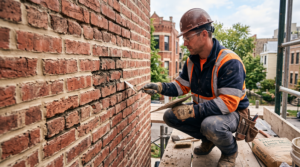
True historic restoration isn’t about guesswork; it’s about technical accuracy. One of the most critical aspects of this work is Mortar Matching. Using modern, high-strength cement on a building from the 1890s is a recipe for disaster. Because old bricks are often softer, the mortar must act as the “sacrificial” element, absorbing the stress of thermal expansion and contraction. Heritage Masonry utilizes laboratory analysis to replicate the exact lime and aggregate profiles of 19th-century mortars, ensuring a seamless and durable repair.
Tailored Solutions for Your Property
Every historic building has a unique story and a unique set of needs. Whether you are managing a landmarked institution or an 1880s worker’s cottage, the approach must be customized based on:
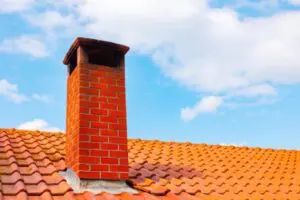
- Scale: From localized chimney reconstruction to full-scale facade repointing.
- Budget: Prioritizing critical structural repairs to plan for long-term health.
- Goals: Maintaining historic district compliance while ensuring the wall remains breathable and weather-tight.
Why Choose Heritage Masonry?
At Heritage Masonry, our restoration process is built on technical accuracy. We follow the Secretary of the Interior’s Standards for Preservation, ensuring that every repair moves in harmony with your building. We don’t just quote a job; we provide a long-term solution for your investment. From historic chimney reconstruction in Pullman to bungalow facade repointing in Beverly, we are committed to preserving the architectural legacy of the Chicago region.
FAQ Section
Q: Can you remove graffiti from historic brick?
Yes, we utilize low-pressure steam and specialized detergents to gently extract paint without damaging the masonry’s natural “fire-skin.”
Q: What is masonry consolidation?
It involves applying deep-penetrating “consolidates” to strengthen crumbling brick or “sugaring” stone, binding the material back together at a molecular level.
Q: Does Heritage Masonry handle large-scale projects?
Yes, we manage complex projects for churches and schools, as well as providing sensitive repairs for private historic homes.
Conclusion
Preserving a historic building is a responsibility that requires specialized skill and period-correct materials. Heritage Masonry is proud to be Chicago’s partner in historic preservation, offering engineering-led solutions that protect both the aesthetic and structural integrity of our city’s landmarks. If your historic property is in need of an assessment, contact us today to ensure its health for decades to come.