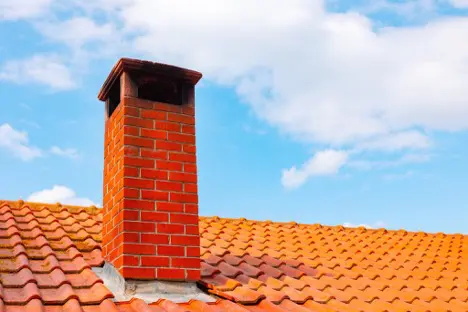
A chimney needs a full rebuild when the structural damage goes below the surface, such as a failing foundation, widespread cracking through multiple layers of brick, or a crown that has separated from the flue. A chimney needs repair, not a rebuild, when the damage is limited to the surface, such as isolated mortar joints, a cracked crown, or minor flashing issues. The right call depends on how deep the damage runs, not just how bad it looks from the ground.
Chicago’s freeze thaw cycles are hard on chimneys. Water gets into small cracks, freezes, expands, and widens those cracks every winter. By the time a homeowner notices a problem, the damage has often been building for years. Knowing the difference between a repair and a rebuild can save thousands of dollars, or it can prevent a homeowner from pouring money into a chimney that was never going to hold up long term.
Why Chimneys Fail Faster in Chicago Than in Other Cities
Chicago’s climate puts more stress on masonry chimneys than milder regions because of repeated freeze thaw cycles combined with lake effect moisture. This isn’t a hot climate or a dry climate. It’s a wet, cold, freeze-thaw climate, and that combination is one of the toughest environments for brick and mortar.
Here’s the mechanism most homeowners don’t know about. Brick and mortar are porous. They absorb small amounts of water every time it rains or snows. When temperatures drop below freezing, that trapped water expands by about 9%. This expansion pushes against the surrounding brick and mortar from the inside. Over dozens of freeze thaw cycles each winter, this slowly breaks apart the bond between bricks and mortar joints.
Chimneys take this stress worse than exterior walls for one simple reason: they’re exposed on all four sides, sitting above the roofline where wind and moisture hit them directly. A wall has the benefit of a building’s interior mass and airflow protecting one side. A chimney has no such protection.
Signs Your Chimney Needs Repair, Not a Rebuild
A chimney needs repair rather than a full rebuild when the damage is isolated to specific, fixable components rather than affecting the entire structure’s integrity. These are the signs that a repair will solve the problem.
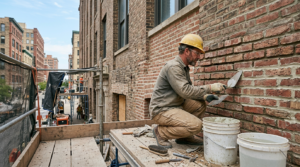
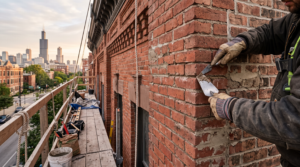
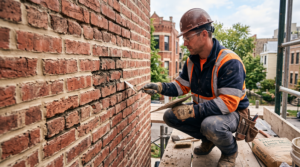
Deteriorating mortar joints. If the mortar between bricks is crumbling, cracked, or missing in sections, but the bricks themselves are intact, this is a classic case for repointing. Repointing removes the failing mortar and replaces it, restoring the chimney’s water resistance without touching the brick structure itself.
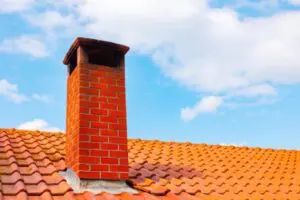
A cracked or damaged crown. The crown is the concrete or mortar cap at the very top of the chimney. It’s the single most important piece for keeping water out, since it covers the entire top surface. A cracked crown can usually be resealed or recapped rather than requiring a full rebuild, as long as the cracking hasn’t caused water damage to spread into the chimney’s interior structure.
Flashing issues. Flashing is the metal material that seals the joint between the chimney and the roof. When flashing rusts, separates, or was installed incorrectly, water gets in at the roofline. This is a repair to the flashing itself, and it’s often mistaken for a chimney problem when it’s actually a roofing detail.
Isolated spalling. Spalling happens when moisture inside the brick causes the face to flake, pop, or crack off. If this is happening to a handful of bricks rather than large sections of the chimney, those individual bricks can be replaced without rebuilding the whole structure.
Efflorescence. That white, chalky residue on brick is efflorescence, which is mineral salt being pulled out of the masonry by moisture. On its own, efflorescence is cosmetic. But it’s also a warning sign that water is moving through the masonry, so it’s worth having someone check whether the moisture source needs to be addressed.
Signs Your Chimney Needs a Full Rebuild
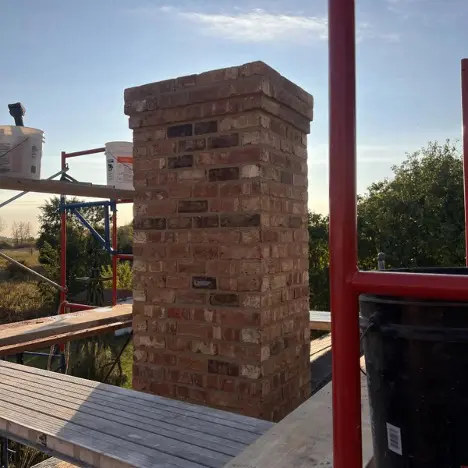
A chimney needs a complete rebuild when the structural damage compromises its ability to safely stand or function, rather than being limited to surface level wear. These signs point toward a rebuild rather than a patch job.
A leaning or separating chimney. If a chimney is visibly tilting away from the house, or if there’s a visible gap where the chimney meets the roofline, this points to a foundation problem or structural failure that repair work cannot fix. This is one of the more serious warning signs in our guide to red flags that signal a property needs immediate masonry attention, and it should never be ignored.
Cracks that run through multiple bricks in a stair-step or vertical pattern. A single cracked brick is a repair. Cracks that run diagonally across many bricks in a stair-step pattern, or vertically through several courses, usually signal that the chimney’s foundation has shifted or settled unevenly. Patching over this kind of movement doesn’t stop it. It just hides it temporarily.
Significant deterioration below the roofline. Chimneys that show heavy spalling, missing mortar, and crumbling brick from the roofline down to the base often have structural issues that started years earlier. When more than 25% of the visible structure shows this kind of decay, a rebuild is usually more cost-effective than trying to repair section by section.
A chimney that fails a structural inspection. Sometimes the exterior looks manageable, but an inspection reveals that the interior flue liner is cracked, the chimney is unsupported at a critical point, or the masonry no longer meets code for structural safety. In these cases, rebuilding from a safe point upward is the only option that addresses the actual problem.
Rust jacking around embedded steel. Some older chimneys have steel components, like lintels or support angles, embedded in the masonry. When that steel corrodes, it expands, a process called rust jacking, and the expansion physically pushes the surrounding brick apart. This kind of damage almost always requires taking the affected section down and rebuilding it correctly, since patching brick around actively rusting steel just delays the same failure.
The Cost Difference Between Repair and Rebuild
Repair costs are almost always lower than rebuild costs, but the real value of choosing correctly is avoiding a repair that fails within a few years because the underlying problem wasn’t fixed. Repointing a section of mortar joints is a targeted job that addresses a specific, contained problem. A full or partial rebuild involves removing courses of brick down to sound material and rebuilding upward, which naturally costs more in both materials and labor.
Here’s the insider knowledge most homeowners don’t get told: a partial rebuild, where only the damaged upper portion of the chimney above the roofline is taken down and rebuilt, is often possible instead of a complete teardown. This works when the chimney’s structure below the roofline and its foundation are still sound. It’s a middle option that costs less than a full rebuild while still correcting problems that a repair alone can’t fix.
The danger is when a homeowner chooses the cheaper repair for a problem that actually needed a rebuild. Patching a leaning chimney or repointing over cracks caused by foundation movement doesn’t solve anything. The same cracks return within a year or two, and the homeowner ends up paying for the repair and the eventual rebuild.
How an Inspection Determines the Right Approach
A proper chimney inspection looks past the visible brick to check the crown, flashing, flue liner, and the chimney’s structural connection to the house. This is the only reliable way to tell whether a chimney needs repair or a rebuild, because surface damage doesn’t always match what’s happening structurally.
A thorough inspection typically involves checking for movement or separation at the roofline, examining the crown and flashing up close rather than from the ground, checking mortar joint depth and condition throughout the chimney’s height, and looking for signs of water intrusion inside the home near the chimney chase. For older Chicago homes, this also means checking whether the chimney was built with the compression strength and materials appropriate for its age, since older masonry often needs different repair materials than modern brick.
Homeowners in Chicago and the surrounding area can find more detail on the full inspection and structural repair process here, including what’s involved in chimney and foundation restoration specifically.
What to Ask Before Approving Chimney Work
Before approving any chimney work, ask what specifically is failing, why it’s failing, and whether the proposed fix addresses the root cause or just the visible symptom. A contractor should be able to explain the difference clearly.
Three questions are worth asking directly. First, is this damage isolated or does it extend into the chimney’s structural support? Second, if a rebuild is recommended, is a full teardown necessary or would a partial rebuild above the roofline solve the problem? Third, what caused the damage in the first place, and does the proposed work prevent it from happening again? A contractor who can’t answer that third question clearly is likely offering a cosmetic fix rather than a lasting one.
Frequently Asked Questions
How long does a chimney rebuild take compared to a repair?
A repointing repair on a chimney typically takes one to two days, depending on the extent of the mortar work. A full or partial rebuild usually takes three to seven days, since it involves removing damaged brick, allowing new mortar to cure properly between stages, and rebuilding the crown and flashing at the end.
Can I repair a chimney myself to save money?
Chimney work involves working at height, matching structural mortar strength to the existing masonry, and understanding how water moves through brick, which makes DIY repair risky both for safety and for long-term results. Using the wrong mortar mix or missing a structural issue can lead to repeat damage within a year.
Does a leaning chimney always mean a full rebuild?
Not always, but it usually points to a foundation or structural issue that needs a proper evaluation before any decision is made. In some cases, the lean can be traced to a localized issue that allows for a partial rebuild rather than removing the entire structure.
How do I know if my chimney’s foundation is the problem?
Signs that point to the foundation include stair-step cracking through multiple brick courses, a visible gap or separation where the chimney meets the roof, and cracks that keep returning after being patched. A structural inspection is the only way to confirm foundation involvement.
Is it normal for older Chicago homes to need chimney rebuilds?
Many chimneys on Chicago homes built before the 1950s are reaching an age where original mortar and materials have reached the end of their service life, making rebuilds more common in this housing stock. This is especially true for homes that have never had a chimney inspection or maintenance performed.
Getting the Right Fix the First Time
Knowing whether a chimney needs a repair or a rebuild comes down to understanding whether the damage is surface level or structural. Isolated mortar issues, a cracked crown, or flashing problems usually call for a targeted repair. Leaning chimneys, stair-step cracking, or significant deterioration below the roofline usually call for a rebuild, sometimes partial and sometimes complete.
Heritage Masonry has spent years diagnosing exactly this kind of structural and moisture related damage across Chicago homes, using inspections that look at root causes rather than surface symptoms alone. Every recommendation is based on what the chimney actually needs, whether that’s a contained repair or a full rebuild, so homeowners aren’t stuck paying for a fix that doesn’t last. For homeowners trying to figure out which category their chimney falls into, requesting an estimate is the clearest way to get a straight answer backed by a real inspection.